My grandmother gave me a book every birthday. Not a toy, not money, just a book. She'd wrap it in brown paper tied with string, and I remember the weight of it in my hands before I even tore the paper off. Some of those books I read once and forgot. Others I read until the spines cracked and the pages went soft at the edges. The difference wasn't the price or the publisher or even the author. It was whether the book understood the child I actually was.
I think about that now when people ask me what to buy for their niece, their grandson, the child of a friend they haven't seen in three years. They want a recommendation. They want to get it right. And I understand the pressure — a book that sits on a shelf is a small sadness. A book that gets read until the cover falls off? That's a childhood memory in the making.
Start with the child, not the bestseller list
This sounds obvious, but it's the step most people skip. They walk into a shop or scroll a website and look for what's popular, what's won awards, what the algorithm suggests. But the child who loves dinosaurs doesn't care about the Caldecott Medal. The child who's afraid of the dark doesn't need a book about sharing.
Ask yourself: what makes this particular child light up? Do they carry a stuffed animal everywhere? Are they obsessed with how things work? Do they make up stories for their toys? A book that meets a child where they already are will always outperform a book that tries to take them somewhere the adult thinks they should go.
When I wrote Colours of the Rainbow, I wasn't thinking about the market. I was thinking about my neighbour's daughter, who used to sit on my garden wall and name every flower she could see. She didn't want a story about a dragon learning colours. She wanted to point at the page and say "that's the blue one, that's the yellow one." So that's what I gave her. Simple. Direct. No narrative friction.
Age brackets are guidelines, not rules
The publisher puts an age range on the cover. 0-3. 3-7. 7-11. Useful for shelving, less useful for choosing.
My nephew was reading chapter books at four. My friend's daughter didn't sit still for a picture book until she was nearly six. Both perfectly normal. Both would have been ill-served by following the label.
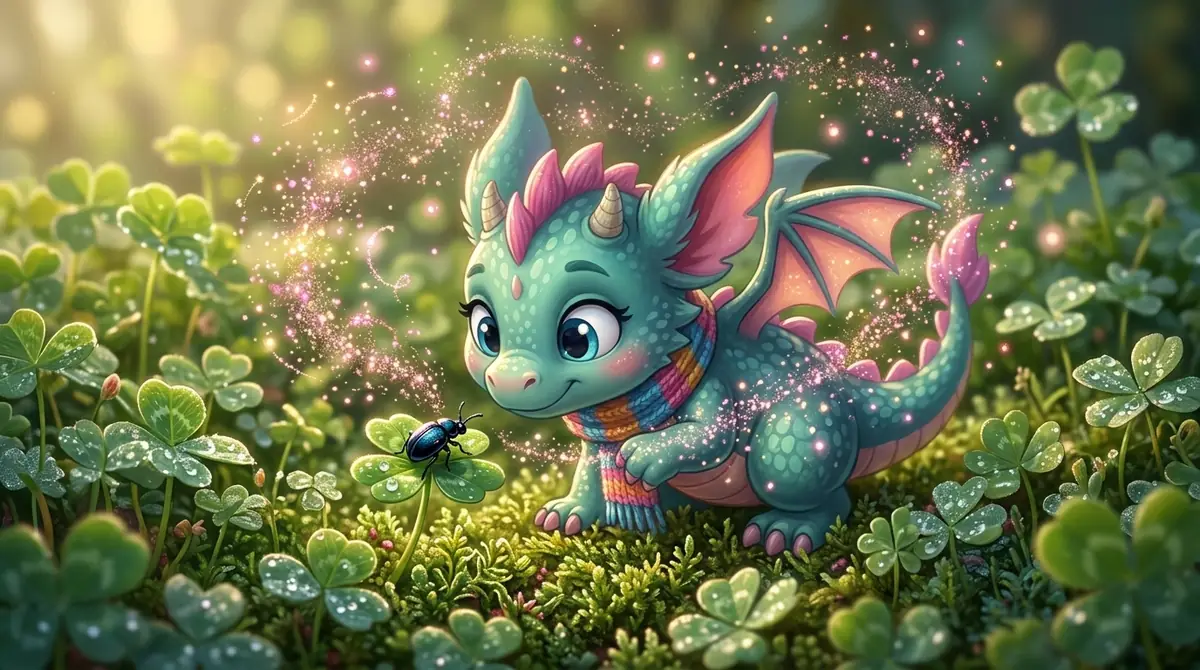
Instead of age, think about stage. Is the child still in the "point and name" phase? Board books with clear, uncluttered images. Count to 10 works here because each spread is just the number and the objects — no busy backgrounds, no competing text. Is the child starting to anticipate what comes next? Count along with Poppy adds a gentle narrative thread, a dragon who counts her treasure, so the numbers have a reason to exist. Is the child asking "why?" and "what if?" Who Sneezed Glitter lives in that space — a mystery with a giggle at the end, enough plot to hold attention but not so much it overwhelms.
The re-read test
Here's the question nobody asks in the shop: will the adult want to read this aloud fifty times?
Because they will. If the book lands, they will read it fifty times. Maybe more. I've had parents tell me they can recite Who Sneezed Glitter from memory. One father said he reads it in his sleep. That's the goal — not that the child loves it, but that the adult doesn't come to dread bedtime.
Flip through the book before you buy. Read a few pages out loud. Does the rhythm work? Do the words feel good in your mouth? Is there a moment that makes you smile, even on the tenth reading? If you're bored by page three, the child will feel it. Children are ruthless detectors of adult enthusiasm.
Series over standalones
This is the practical bit. A standalone book is a single experience. A series is a relationship.
When a child falls for a character, they want to visit them again. They want to know what Poppy's doing today, what trouble she's getting into, what colour her scales are this time. The familiarity builds confidence — they know the world, they know the rhythm, they can predict the patterns. That predictability isn't boring for a child. It's mastery.
It's also easier for the gift-giver. Birthday coming up? Next book in the series. Christmas? Box set. The child's excitement when they recognise a familiar character on a new cover — that's the moment you know you chose well.
Art that rewards looking
Children read pictures before they read words. A book with flat, functional illustrations gets one read. A book where the pictures tell their own stories — a mouse hiding on every page, a background detail that changes each spread, a visual joke the text never mentions — that book gets pulled off the shelf again and again.
I didn't understand this properly until I saw the first proofs for Colours of the Rainbow. My illustrator had put a tiny ladybird on every page. Not mentioned in the text. Just there. Children found it before I did. They'd point — "ladybird!" — and turn the page hunting for the next one. That wasn't in my manuscript. It was a gift from the artist to the reader. Those are the details that make a book belong to the child.
The ending matters more than you think
A bad ending leaves a child unsettled. A good ending leaves them satisfied. A great ending leaves them thinking.
Who Sneezed Glitter ends with Poppy covered in glitter, sneezing again, and the cycle potentially starting over. It's a circle. Children love circles. They feel complete but not finished. There's room for the child to imagine what happens next.
Avoid books that end with a moral. "And that's why sharing is important." The child knows. They don't need the lecture. They need the story to land softly and leave a warm residue.
A practical checklist (that fits on a receipt)
Next time you're standing in the shop with your phone light on the barcode, run through these:
- Does it match something this specific child loves?
- Will the adult enjoy reading it aloud?
- Do the pictures have secrets worth finding twice?
- Is it part of a world the child can return to?
- Does the ending feel like a sigh, not a lesson?
That's it. Five questions. Takes thirty seconds. Saves you from being the person who gave the three-year-old a sixty-page hardback about emotional intelligence.
The one book they'll remember
My grandmother's best gift wasn't the most expensive. It was a scruffy paperback about a boy who could talk to cats. I was seven. I hated reading. I read that book in one afternoon because I needed to know if the cat was real. She'd watched me. She knew I liked animals more than people. She chose for me, not for the shelf.
That's the whole secret. Choose for the child in front of you. Not the child the marketing department invented. Not the child you wish they were. The one who's currently lining up their toy cars by colour, or asking why the moon follows the car, or demanding the same dragon story for the forty-seventh time.
That child deserves a book that sees them. And you're the person who can give it to them.