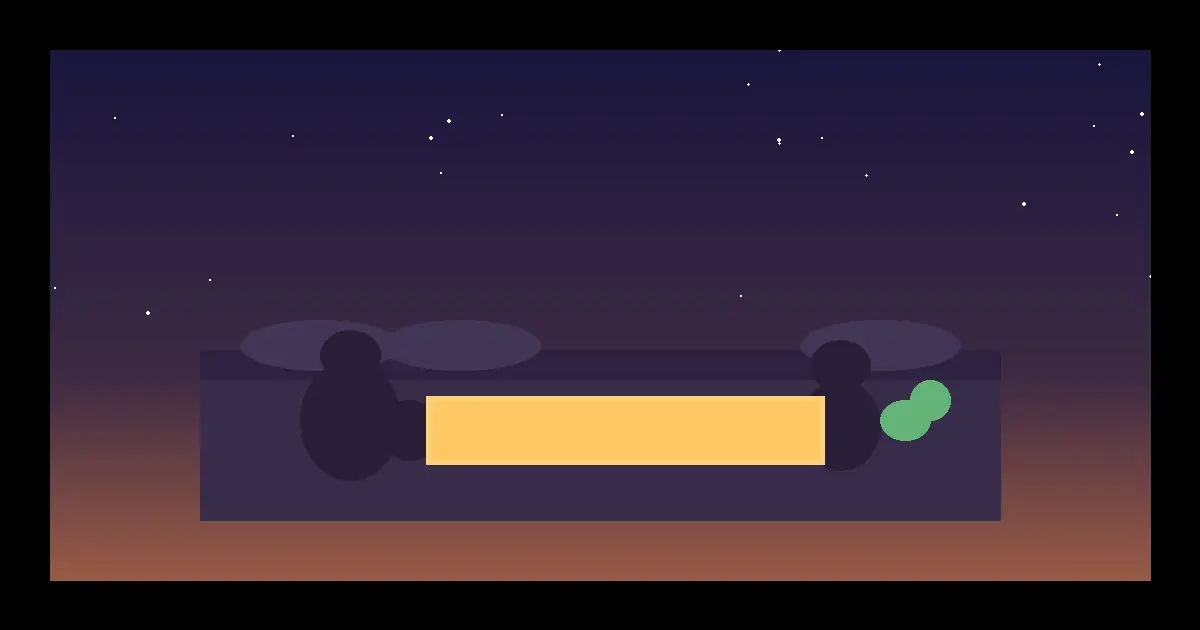
The night I nearly gave up on bedtime stories
It was a Tuesday in November, three years ago. My youngest was two and a half, and she had decided that sleep was for people who lacked imagination. Every night, the same negotiation: one more story, one more sip of water, one more check under the bed for the dragon she was certain lived there. (The irony of a dragon-fearing child being raised by someone who writes about a dragon named Poppy was not lost on me.)
That Tuesday, I was exhausted. The kind of exhausted that makes you forget why you walked into a room. I sat on the edge of her bed with Colours of the Rainbow in my hand — the very first Poppy book I ever wrote — and I thought, just this once, let's skip it. Let's just lights-out and goodnight.
She looked at me with those enormous eyes. "But Mummy, my brain needs the story."
She had no idea what she was saying. She was two. But she was right.
What happens in those fifteen minutes
Here is what the research tells us, stripped of the academic language: when you read to a child before bed, their cortisol drops. Their heart rate slows. The part of their brain that stays alert for danger — the amygdala, if you want the proper name — quiets down. Meanwhile, the prefrontal cortex, which handles language and emotional regulation, lights up.
In practical terms: the story signals safety. The rhythm of your voice signals safety. The physical closeness signals safety. And a child who feels safe falls asleep faster and stays asleep longer.
I didn't know any of this when I started writing Poppy. I just knew that the books I loved as a child — The Tiger Who Came to Tea, Where the Wild Things Are, the Beatrix Potter books with their watercolour edges — had a particular feeling. A hush. A slowing down. That was what I wanted to make.
The repetition question
Parents ask me sometimes: "My child wants the same book every night. Should I worry?"
No. You should pour yourself a tea and read it again.
Repeated reading builds something called "predictive processing" — the brain learns to anticipate what comes next, and that anticipation creates a tiny hit of dopamine each time the prediction proves right. It's the same mechanism that makes a familiar song feel good. For a child, it's also mastery. They know this world. They own it. In a life where so much is decided for them — bedtime, vegetables, which socks go on which feet — a known story is territory they control.
Poppy's books are built for this. Count to 10 and Count Along with Poppy use the same character and the same counting rhythm across different scenarios. Colours of the Rainbow and Who Sneezed Glitter share a colour vocabulary. A child who reads one recognises the bones of the others. That familiarity isn't laziness on my part — it's scaffolding.
The hidden curriculum
There's another layer, though, and this is the one that keeps me writing.
Bedtime stories teach emotional vocabulary. When Poppy feels sad because her glitter sneeze made a mess, or proud because she counted to ten all by herself, the child listening learns the words for those feelings. They learn that feelings have names. That feelings pass. That a mess can be cleaned up and a mistake can be laughed at.
I've had parents tell me their toddler started saying "I'm feeling a bit Poppy today" when they were overwhelmed. That — that right there — is why the extra fifteen minutes matters. Not the sleep science, though that's real. Not the literacy boost, though that's real too. It's the child who now has a word for the storm inside them.
When it feels like a chore
Some nights, it will feel like a chore. You'll have worked late, or the dinner burnt, or you're carrying a worry that has nothing to do with dragons or glitter or counting. Your voice will be flat. You'll skip a page and hope they don't notice. (They always notice.)
Those nights, the story still works. Maybe not as well. But the ritual holds. The child learns: this person shows up. This person reads to me even when they're tired. That reliability becomes part of their internal model of the world — people who love you show up.
I have nights where I read Who Sneezed Glitter for the twentieth time that month and I think, surely I wrote something else they'd like. But they don't want something else. They want the known world. They want Poppy to sneeze glitter again, and they want to laugh at the same page, and they want to fall asleep knowing exactly how it ends.
A small defence of the physical book
I know, I know — tablets exist. Audiobooks exist. I'm not here to be purist about it. But there is something about the weight of a book in small hands. The texture of the page. The way a child turns back to check a detail they missed. The way they trace Poppy's scales with a fingertip.
That tactile contact matters. It grounds the story in the physical world. It says: this is real. This is here. You can hold it.
When I design the Poppy books for print, I think about that fingertip. I choose paper with a slight tooth to it. I make sure the colours don't bleed. I want the object to feel worth holding.
What I tell myself on the hard nights
On the nights when I'm the tired parent instead of the author, I remind myself: this phase is short. The child who demands three stories and a negotiation about the dragon under the bed will, sooner than I can believe, read to herself. She'll close her own door. She'll need me in different ways.
The fifteen minutes isn't a tax. It's an investment that pays out in ways I can't measure — in cortisol levels and vocabulary and the quiet certainty that she is loved.
And if, in twenty years, she reads Poppy to her own child and traces the same scales with her fingertip — well. That's the dream, isn't it?
Poppy's books are on Amazon if you're looking for something to read tonight. But honestly? Whatever book makes your child's eyes light up — that's the right one. Read it again. And again. You're not just reading a story. You're building a brain.